
How water change during production affects key aspects
Key aspects affected by water change
During food processing water absorption or water loss is common, especially in the heating process. It is important to account for this for several reasons;
- The declared ingredient list may be affected additionally for added water to the recipe. See further explanation below.
- Any waterloss or water absorption affects the technical calculation of nutritional values per 100 gram food.
- Any waterloss or water absorption affects the cost per kg food.
- The declared net weight should reflect the final weight of the product, after adjusting for water changes.
| How water loss may affect declared ingredient list |
| The general rule for the declared ingredient list is that each ingredient should be sorted descending by the weight it had when added to the mixing bowl. Let's call this the gross weight. However, for added water things are different. Any water loss should be subtracted from the added water when determining its sequence in the ingredient list. Said differently, it is the net added water that should be used when determining the water's sequence in the declared ingredient list. |
How to adjust for water loss
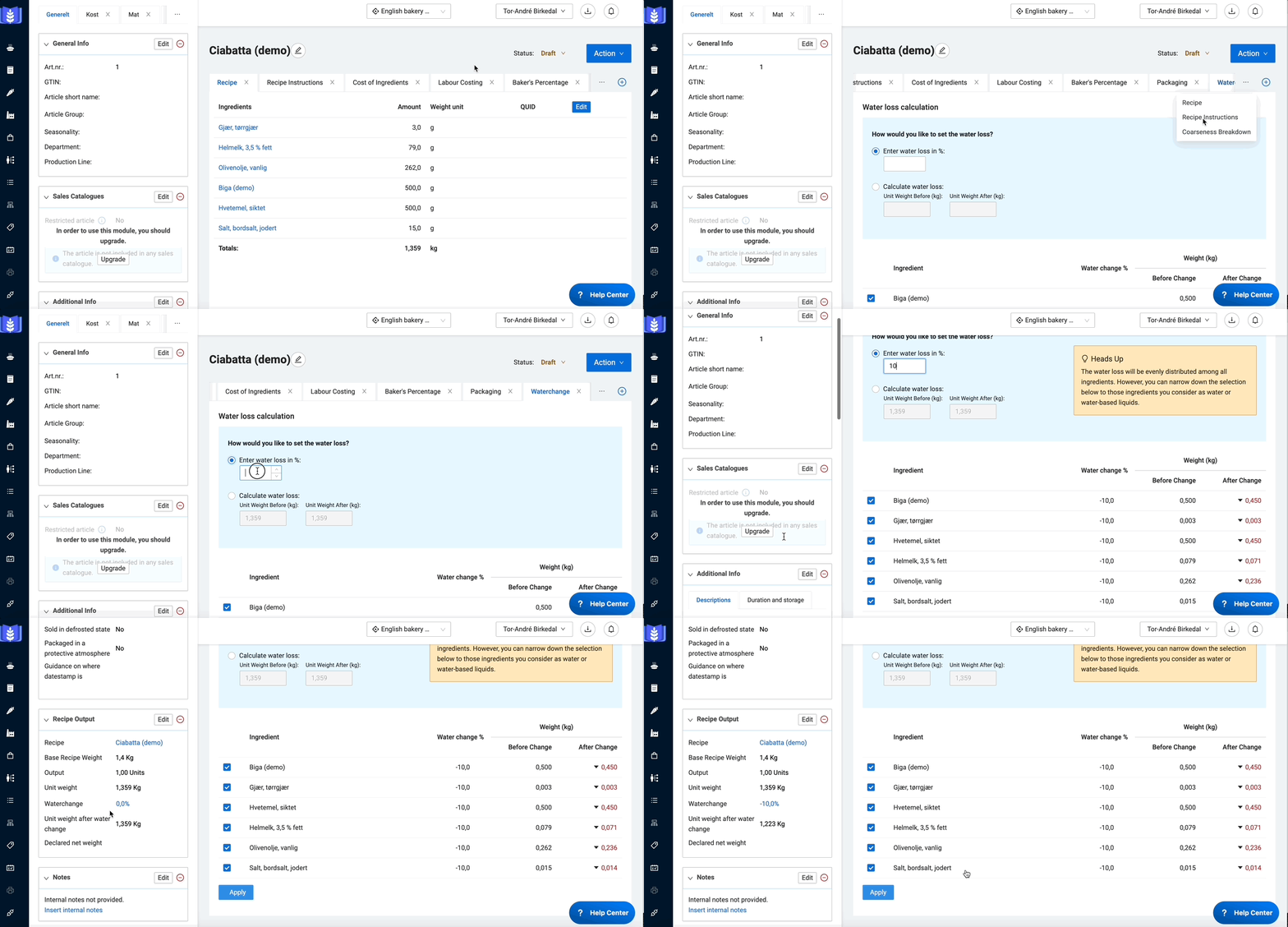
First, navigate to the side panel, general info, and the widget recipe output. Click on the "water change" value (reads 0% in blue if not accounted for). This opens up a new tab in the center of the page called "water change".
On the top of this page, you have two ways to account for water loss to your product:
- Key in unit weight before and after the heating. Then the system will calculate your water loss in percentages.
- Key in the waterloss percentage, like in the video below.
As you can see in the video below, "Unit weight after water change" decreases as you add water loss. Your nutritional values and food costs will automatically correct itself with the water loss. Once done, you should review the declared unit weight.
How to adjust for water absorption
First, determine how much water is absorbed during your production process. For example, as a rule of thumb, dried rice absorbs 3x its own weight. Let's say the recipe contains 1 kg of dried rice. This means that 3 liters of water is absorbed. Simply add 3 liters of water to your recipe. This will make sure that the food costing and the technical calculation of nutritional values are reflecting this change.